

Pheasants and pine trees
Display each panel: D. 13 1/2 in x L. 128 1/2 in, D. 34.3 cm x L. 326.4 cm
Display both panels D. 13 1/2 in x L. 257 in, D. 34.3 cm x L. 652.8 cm
- Gallery Location Gallery 28
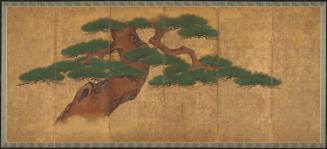
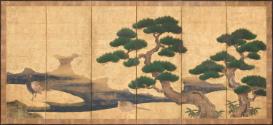
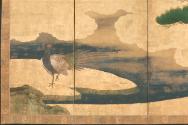
Against an expansive background of golden clouds, gnarled pine trees reach across space from the right and left sides of this screen. Because of their evergreen foliage, pines are considered a symbol of both youth and long life in Japan. They also fuse associations between benedictions for the imperial family and the power of the traditional Japanese deities, the kami. For its part, the pheasant is an emblem of imperial authority in China, and this same suggestion of royalty may attach to these Japanese pheasants as well. The painting is executed in the style associated with the Kano school, professional artists who served Japan’s military leaders.
Japanese folding screens and sliding doors meant for formal rooms often contained paintings against golden backgrounds. These glittering backgrounds were more than merely beautiful: they brightened the dimly lit interiors of aristocratic Japanese homes, which did not have transparent glass windows and doors until the late nineteenth century. The use of gold also attested to the owners’ economic power and social status. The imagery of longevity (pine) and the imagery of status (gold) thus merge indelibly into one another in these screens.
(Label from Exhibition Hidden Gold: Mining Its Meaning in Asian Art)
- pheasant
- pine