

Quail and millet
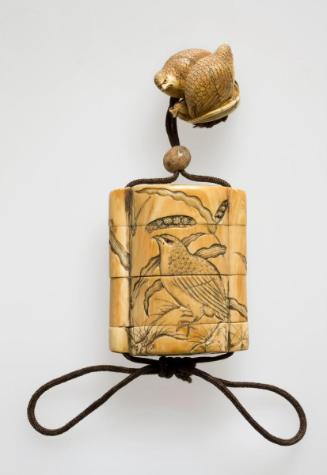
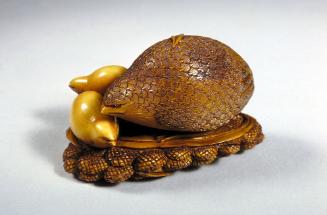
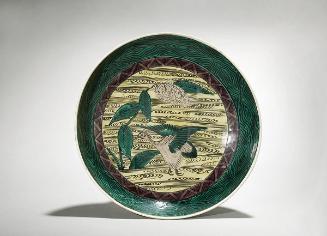
Quail (Coturnix japonica) sheltering from the heat under ripe millet plants is a theme derived from Chinese Song- dynasty academic painting. The plump quail appear to crouch close to the ground while the equally plump millet weighs down the plant’s grassy stems. You can almost feel the last heat of the summer radiating off the ground in this intimate painting. This theme is one that marks the turn of the season from summer to autumn when the harvest is ready to begin.
The artist, Tosa Mitsuyoshi, was trained from an early age to paint in the eponymous Tosa style patronized by the Imperial household. This painting of quail is quite similar to one painted by his grandfather Tosa Mitsuoki (1617–1691) now in the Bigelow Collection of the Museum of Fine Arts, Boston. Mitsuyoshi became head of the Court Painting Bureau (e-dokoro azukari) at the age of eleven upon his father’s death.