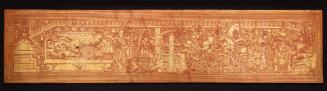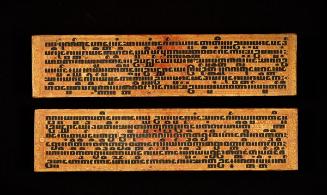

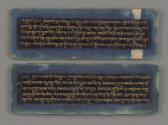
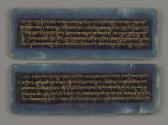

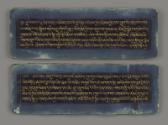

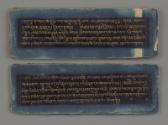

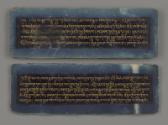


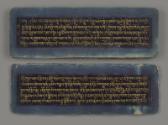

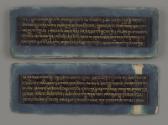


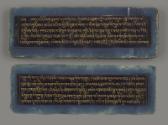

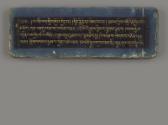

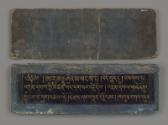
Buddhist text about the bodhisattva Manjushri
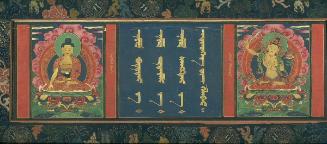
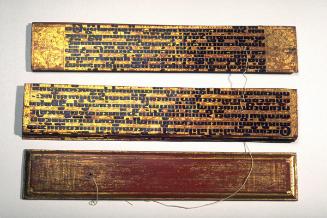
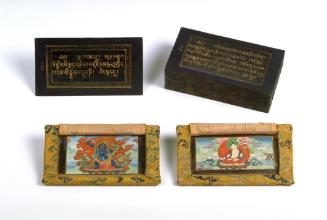
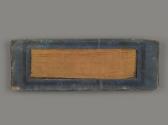
Bodhisattvas are literally “awakening beings” who have vowed to postpone their own enlightenment (nirvana) until they have saved all other beings from the endless cycle of suffering (samsara). This manuscript of a text called Chanting the Names of Manjushri deals with a bodhisattva—the swordwielding Manjushri—whose special role is to reveal how form (rupa) and emptiness (shunyata) are complementary. On the manuscript, this integral relationship between emptiness and appearance is reflected in the use of indigo paper to symbolize emptiness, and gold paint to symbolize luminous appearance.
This manuscript has a storied history—it passed through the hands of some of Tibet’s most important early masters. According to oral history passed on by its donors, the manuscript was given to the famous Indian teacher Atisha by the abbot Rinchen Zangpo (985–1055) of western Tibet. Atisha brought the manuscript to Shalu Monastery in southern Tibet, where the lama Buton, a painting of whom is shown in this gallery, would later compile the Tibetan textual and visual canons.
(Label from Exhibition Hidden Gold: Mining Its Meaning in Asian Art)
- bodhisattva
- Buddhism
- Manjushri