


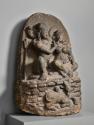

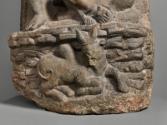


The Hindu god Shiva with the goddess Parvati
Place of OriginBihar state, India; Bihar state
Dateapprox. 600-700
MaterialsStone
DimensionsH. 21 in x W. 14 in x D. 6 3/4 in, H. 53.3 cm x W. 35.6 cm x D. 17.1 cm
Credit LineThe Avery Brundage Collection
Object numberB62S9+
DepartmentSouth Asian Art
ClassificationsSculpture
On View
On viewLocation
Text Entries- Gallery Location Gallery 1
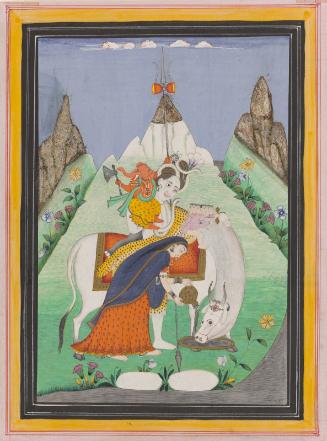
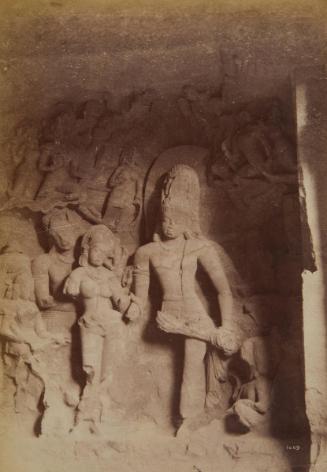
Shiva and his wife Parvati are shown as a loving couple. With their bodies adjoining and arms around each other, the figures form a single visual unit. Their union is further emphasized by Shiva’s erect phallus. The depiction of gods with such overt sexual symbolism may be puzzling to some, but images such as this express the totality of the forces of creation, where Shiva represents the male
principle and Parvati stands for the female principle. No creation—of living beings or inanimate things—is thought possible without both in equal measure. The loving couple also stands as a metaphor for the unity of the individual and the divine.
principle and Parvati stands for the female principle. No creation—of living beings or inanimate things—is thought possible without both in equal measure. The loving couple also stands as a metaphor for the unity of the individual and the divine.
Subject
- Hinduism
- Shiva
- Parvati
- Nandi
- goddess
- deity
approx. 975-1075

Manaku (Indian, about 1700–1760)
approx. 1750
approx. 1300-1500
Lala Deen Dayal Studio
approx. 1875-1900
approx. 1000-1100
approx. 1825-1875