

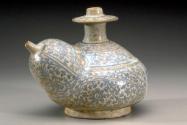

Pouring vessel (kendi)
Place of OriginSi Satchanalai, Thailand; Si Satchanalai
Dateapprox. 1400-1550
MaterialsHigh-fired ceramic with underglaze painting
DimensionsH. 6 1/4 in x W. 6 1/2 in x D. 5 1/2 in, H. 15.9 cm x W. 16.5 cm x D. 14 cm
Credit LineThe James and Elaine Connell Collection of Thai Ceramics
Object number1989.34.38
DepartmentSoutheast Asian Art
ClassificationsCeramics
On View
Not on viewKundika and Kendi
The kundika, as it is called in the classical language of northern India, is a type of vessel made in a variety of materials and found in many parts of Asia. The defining characteristic of these vessels is that they have a mouth and a spout but no separate handle.
The kendi (a Malay/Indonesian term) is a variation of the kundika; usually of rather squat proportions and made of ceramic, kendi were widely used in Southeast Asia. The demand for these vessels in Indonesia was so great that they were produced in China, Japan, Thailand, and Vietnam and exported to Indonesia.
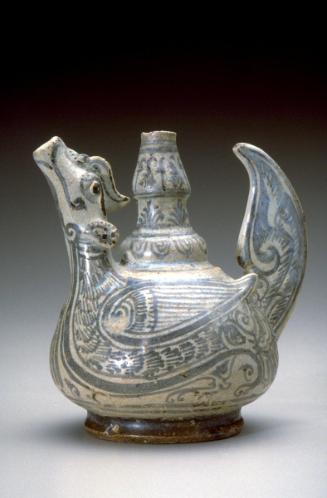
approx. 1400-1550
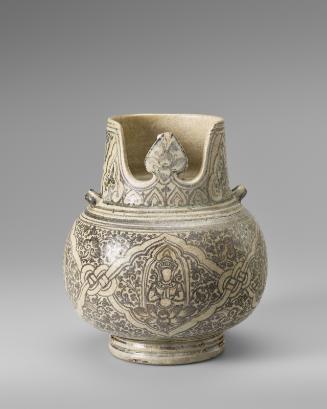
approx. 1500

approx. 1100-1200

14th-early 15th century
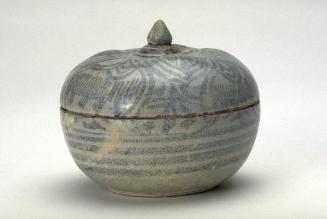
approx. 1520-1580
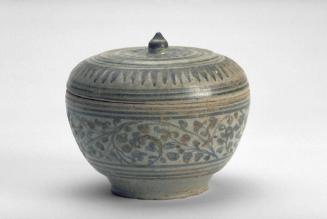
approx. 1520-1580
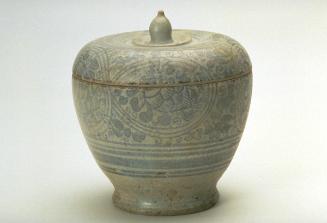
approx. 1520-1580
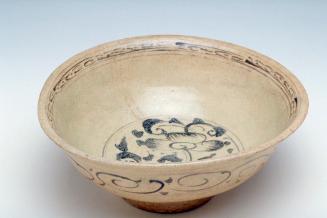
approx. 1375-1425
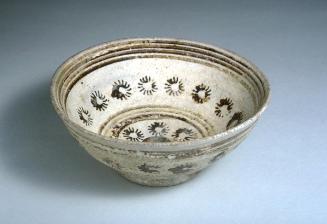
approx. 1500-1550
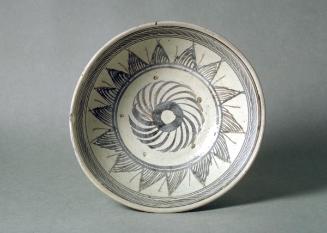
approx. 1500-1550

approx. 1520-1580
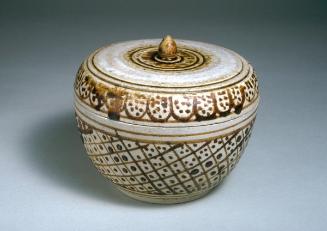
approx. 1520-1580