

Mythical wild goose (hamsa)
Place of OriginThailand
Dateapprox. 1850-1925
MaterialsBrass
DimensionsH. 63 in x W. 29 1/2 in x D. 37 1/2 in, H. 160.0 cm x W. 75.0 cm x D. 95.5 cm
Credit LineGift from Doris Duke Charitable Foundation's Southeast Asian Art Collection
Object number2006.27.29
DepartmentSoutheast Asian Art
ClassificationsSculpture
On View
Not on viewIn many Hindu and Buddhist contexts the wild goose (seen here in a highly stylized form) is associated with soaring high above the earth, and thus with detachment and spiritual attainment. In both northern and central Thailand a wooden or metal sculpture of a wild goose may be affixed to a tall pole in the precincts of a temple or palace. In central Thailand lines of poles topped with sculptures of wild geese such as this have also been used in the staging of elaborate royal funerals. In recent times wild goose sculptures atop poles sometimes have been used as light fixtures, with an electrified lamp suspended from the beak.
The hollow rod rising in the middle of this goose's back may have supported a tiered honorific parasol.
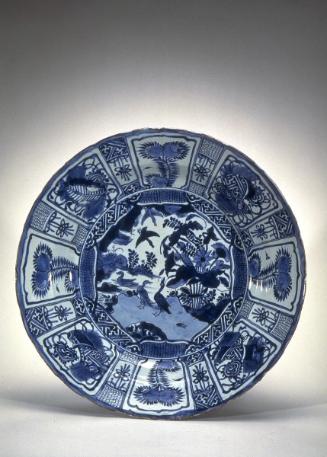
approx. 1570-1644
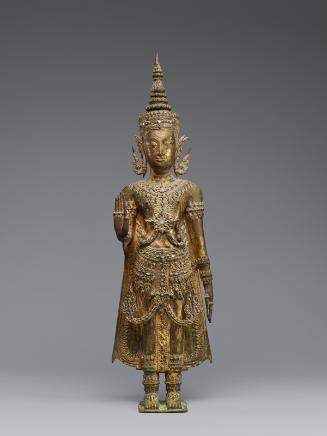
approx. 1700-1750
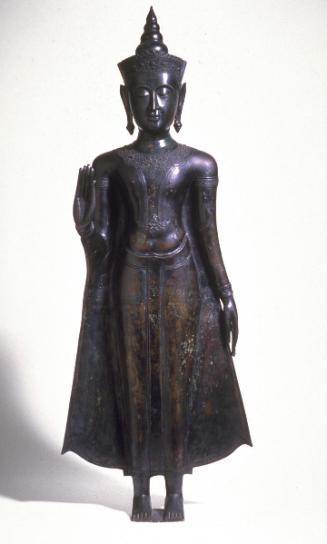
1500-1600 (body), 1900-1960 (head)
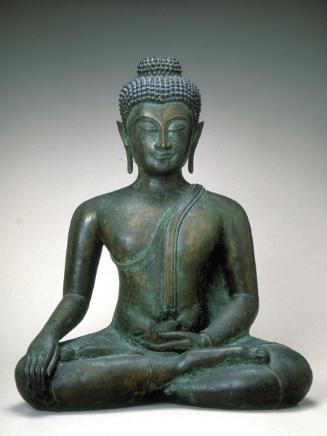
1900-1960
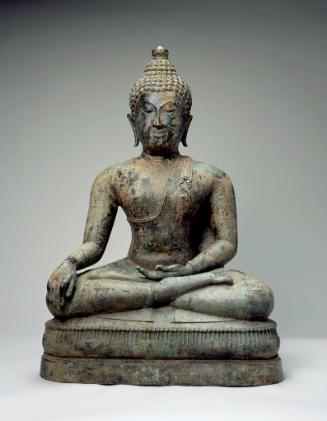
approx. 1950-1995
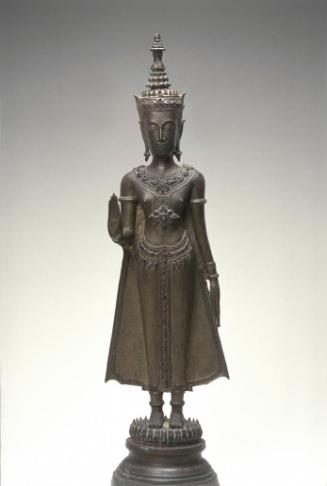
1600-1700

approx. 1775-1825
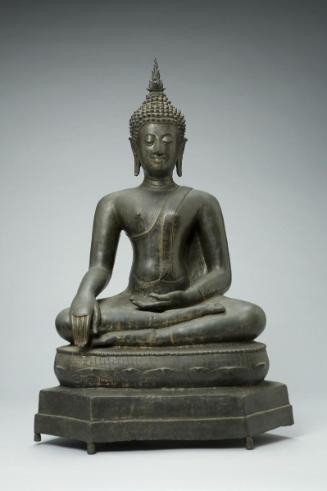
approx. 1500
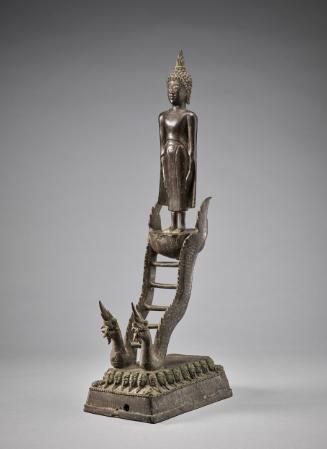
approx. 1700-1900

approx. 1400-1425

approx. 1500-1600
1600-1700