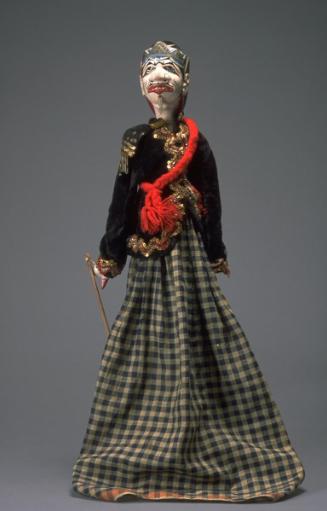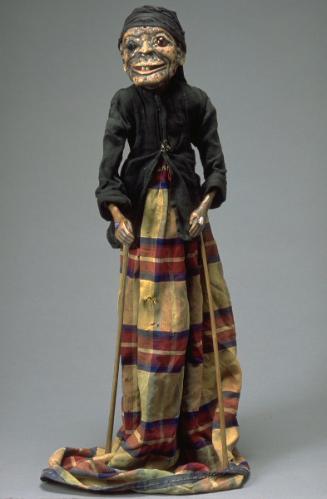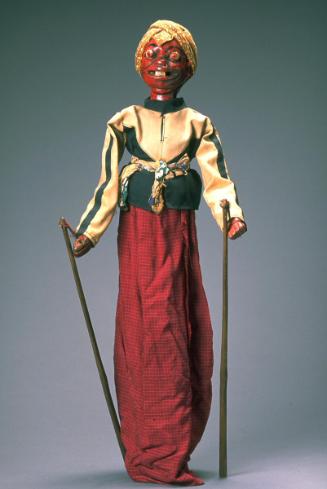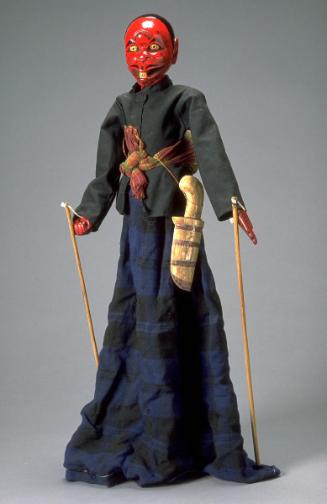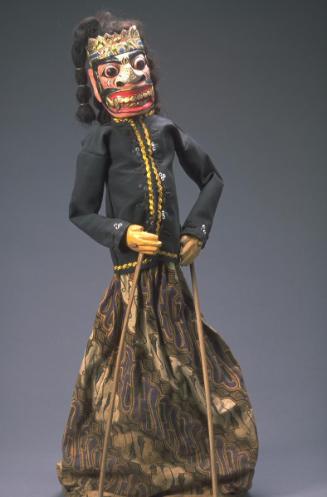

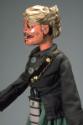
The jester Cepot
Part comic, part confidante, jesters (punakawan), are a uniquely Indonesian aspect of puppet performances. These characters assist the heroes and villains in their pursuits and also embark upon their own adventures. They provide biting commentary, both upon the action within the play and upon the contemporary concerns of the audience. Unlike many of the noble characters who speak in a highly polite level of language, the jesters talk in common language. Audiences eagerly await their appearance and enjoy their ribaldry and physical antics.
The most famous of the jesters is Semar, a squat figure with a round belly and large behind. The name Semar is derived from the Javanese word samar, which means indistinct or obscure. And indeed, the character crosses many boundaries and is defined by none. Physically androgynous, he plays many roles: adviser, clown, servant, and god. Semar is much more than a comic figure; according to Javanese thought he is the brother of the god Shiva (Batara Guru), and a divine figure himself. In one play the tuft of hair on Semar’s forehead is described as the axis of the universe