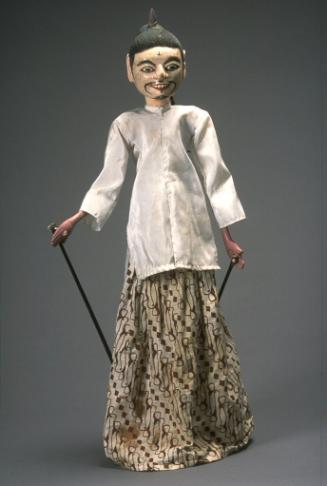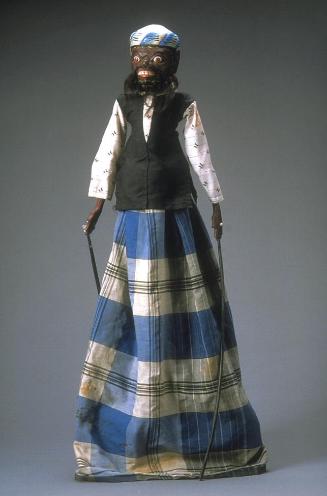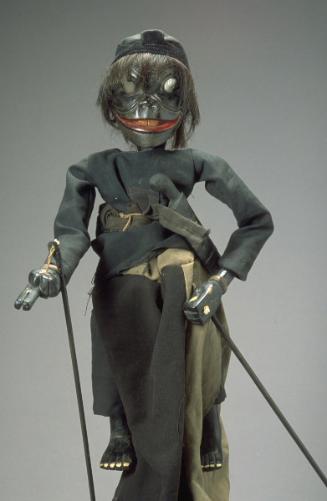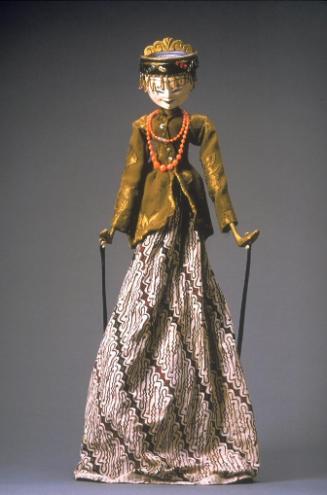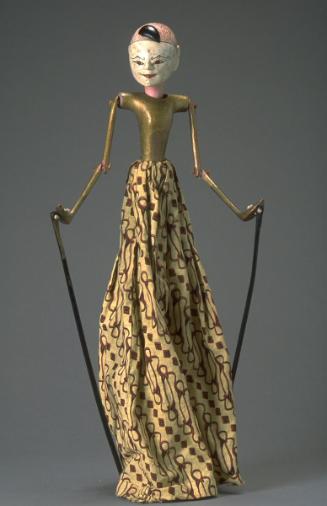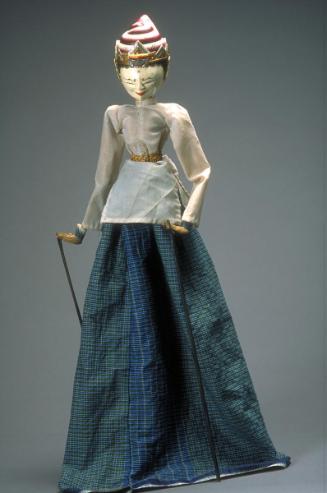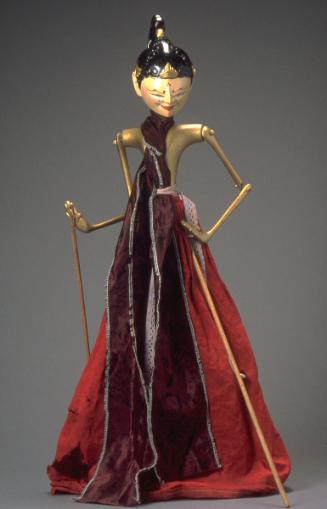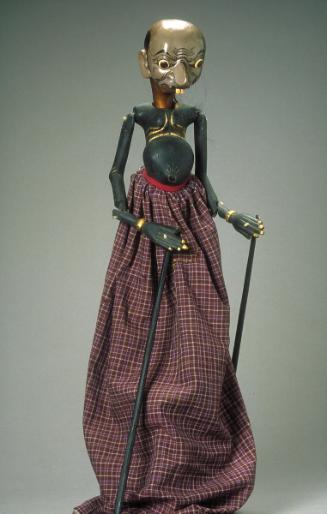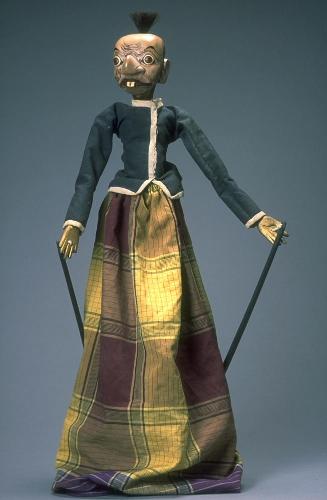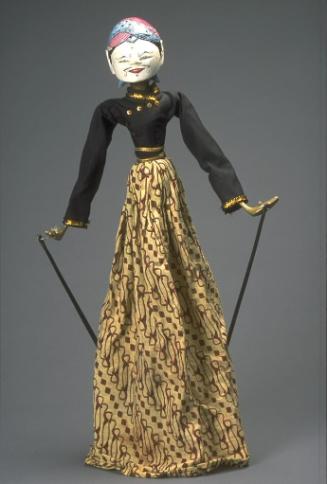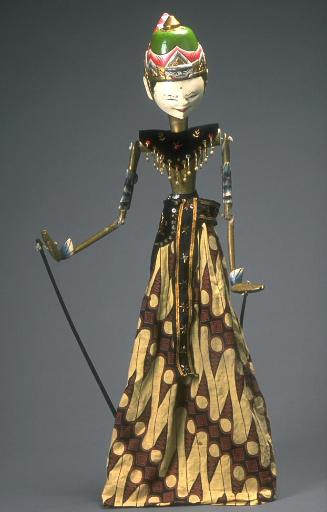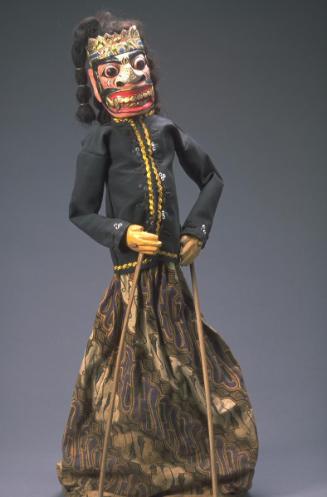
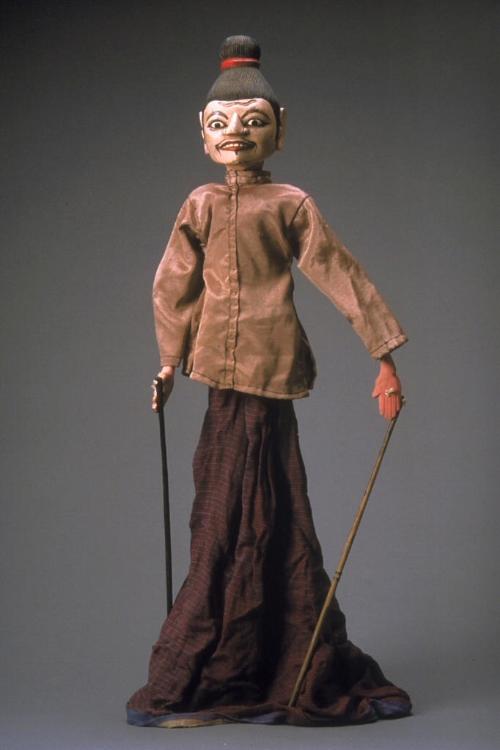
Bababun, a character from the story “Untung Surapati”
Wayang Golek Cepak
The word cepak means “flat,” and it is used to describe the flattened headdresses of the rod puppets made primarily in northern coastal and Central Java. Unlike the puppets of West Java, which have high headdresses and are used in plays based on great Indian epics, in this region a different repertoire of plays is popular, especially those based on indigenous and Islamic stories.
Stories revolving around an East Javanese prince named Panji are particularly admired along the northern coast of Java. A collection of oral and written stories, the Panji tales were first formulated in East Java in the fifteenth century. Aspects of the narratives suggest connections with historical figures, but other aspects are pure fantasy. A central theme in many of the tales is the quest of Panji for his beloved, a princess named Candra Kirana. Renditions of this romance are popular for performances celebrating a wedding. In the cepak tradition one puppet can be used for a variety of characters.