

Double carp
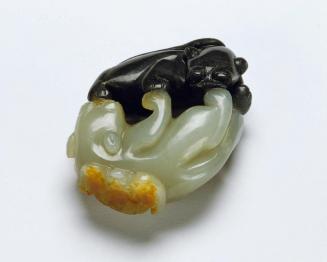
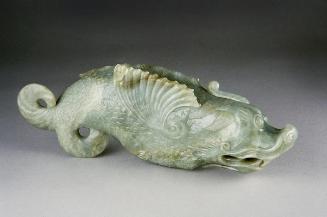
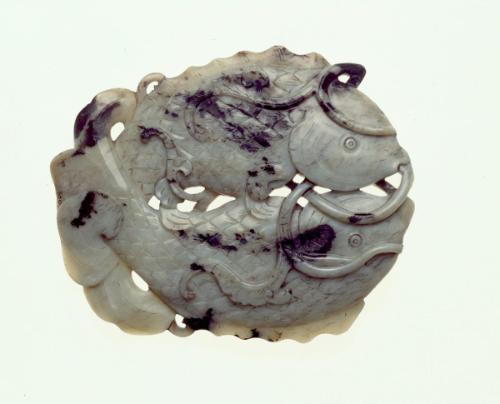
This beautiful ornament is formed from the images of two carp face each other, their tails intertwined. The grayish–white jade with black mottling gives the piece a colorful appearance. The two fish, carrying waterweeds, are depicted in high relief and openwork. The overlapping scales, carved in low relief, bear incised lines.
The fish is not only a pun for abundance, it is also widely used as a marriage symbol. It spawns numerous eggs; therefore it is a symbol of fertility. It is happy in its own environment; thus it symbolizes harmony and connubial bliss. Fish are often seen swimming in pairs; thus fish represent the joy of union. In some parts of China, a pair of fish was included among the betrothal gifts to the bride's family. This jade example was probably used as a wedding present.
The double fish motif is also among the Eight Auspicious Symbols of Buddhism introduced from India. It stands for freedom from all restraints.