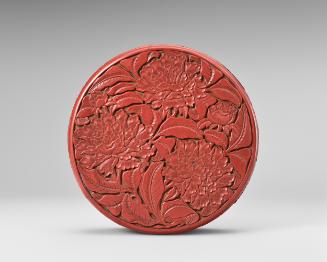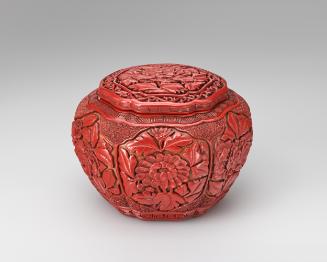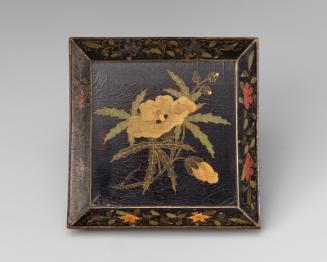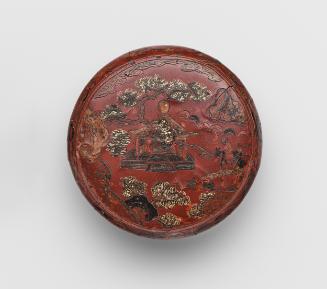
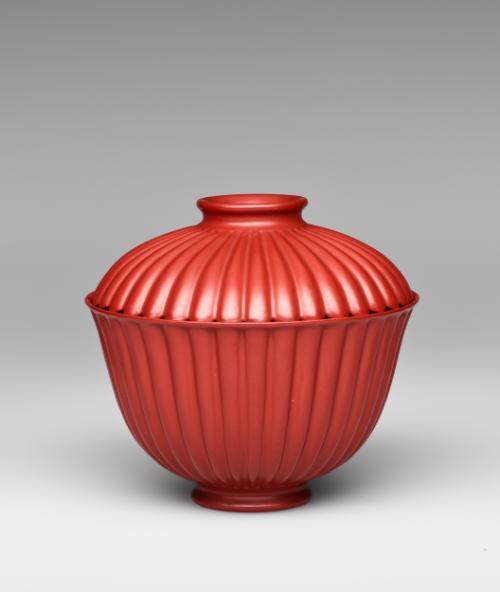
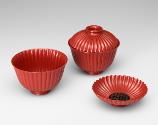
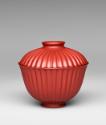


Lidded cup with inscribed poetry by Emperor Qianlong
Other (Lid): H 1 5/16 in × W 4 in × D 4 in (3.3 cm × 10.2 cm × 10.2 cm)
Other (Cup): H 2 5/8 in × W 4 1/8 in × D 4 3/16 in (6.7 cm × 10.5 cm × 10.6 cm)
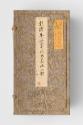
Mount: 2 in × 1 1/2 in × 1 in (5.1 cm × 3.8 cm × 2.5 cm)
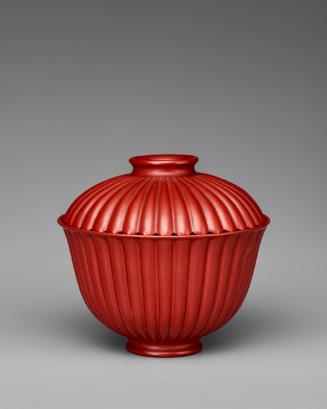
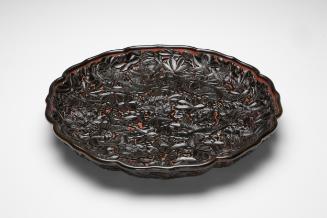
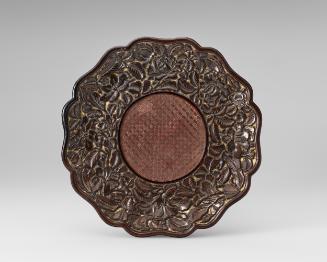
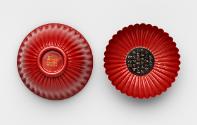
Drawing upon traditional designs found in ceramics, jades, and bamboo and wood carvings, these lacquered wood cups with matching shallow lids are in the shape of a chrysanthemum blossom with thirty-six petals. Carved and filled with gold on the black base of the cup is a poem by the Qianlong emperor, written in clerical script:
In a form of a chrysanthemum flower, The knob is lighter than a chrysanthemum. Sobbing fragrant tea (from it), It echoes my poetry for ceramics, Yet its inner strength embraces delicateness. —Inscribed by Qianlong in the spring of the bingshen year (1776).
The inscription indicates that these cups were originally in the collection of the Qing imperial household and expresses the emperor’s appreciation for both the craftsmanship of the lacquer maker and the delicate fragrance of chrysanthemums. Chrysanthemums were often made into a type of tea during the hot summer.