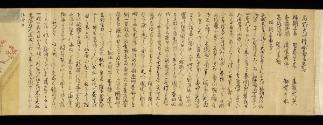
Life of the Great Master of Mount Koya (Koya daishi gyojo-zue), volume 4
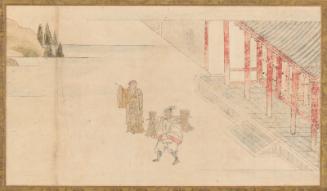
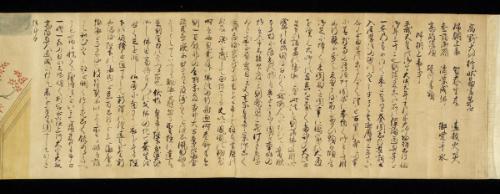
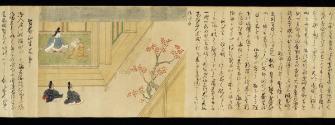
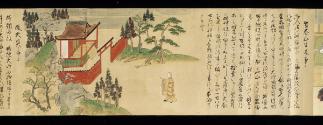
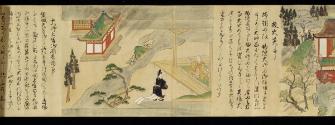
This fifteenth-century scroll illustrates the biography of Kukai (774–835), one of Japan’s most important Buddhist monks. In 804 Kukai traveled to China seeking instruction in the practices of Esoteric Buddhism. Two years later, he returned to Japan and introduced these practices to high-ranking laypersons and monks. After Kukai’s death, illustrated scrolls like this one were created to honor him and spread knowledge of the many accomplishments and miracles associated with his name.
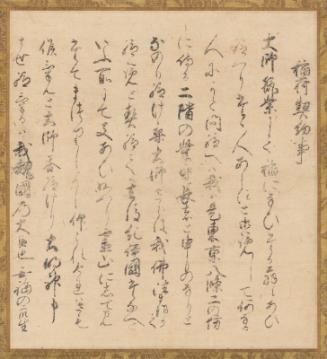
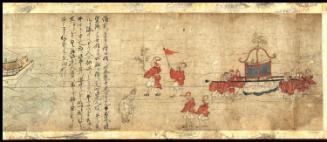
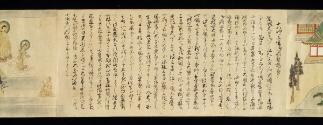
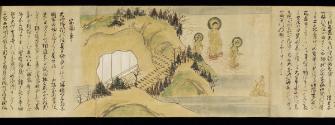
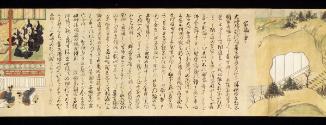
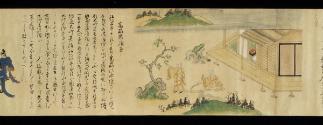
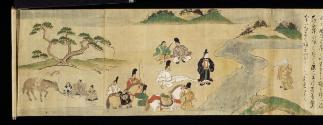
The two scenes shown here are preceded by texts describing events from Kukai’s life. In the first, Kukai visits the mausoleum of Prince Shotoku, an early supporter of Japanese Buddhism, near Osaka. At the tomb Amitabha (Amida), Buddha of the Western paradise, appears before Kukai flanked by two bodhisattvas.
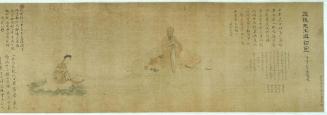
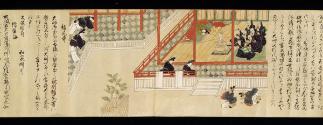
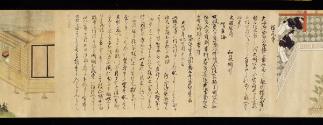
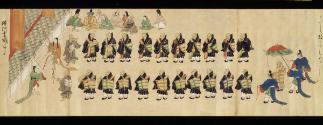
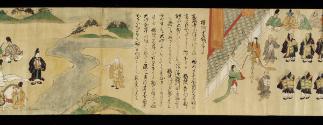
The second scene occurs after Kukai’s return from China. He agrees to debate the merits of Esoteric Buddhism with scholars from other lineages at the Imperial Palace. When the day comes, Kukai faces south, forms his hands in a sacred gesture (mudra), and assumes the appearance of a golden Buddha (Vairocana, sometimes referred to as the Cosmic Buddha). The assembled priests and courtiers bow in reverence.
(Label from in-focus rotation When Pictures Speak: The Written Word in Japanese Art)