

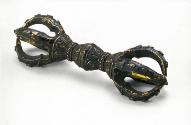

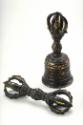
Five-pronged ritual object (Sanskrit: vajra; Japanese: gokosho)
Place of OriginJapan
Date1185-1333
PeriodKamakura period (1185-1333)
MaterialsBronze with gilding
DimensionsH. 7 1/2 in x Diam. 3 1/4 in, H. 19 cm x Diam. 8.3 cm
Credit LineThe Avery Brundage Collection
Object numberB60B357.a
DepartmentJapanese Art
ClassificationsMetal Arts
On View
On viewLocation
Text Entries- Gallery Location Gallery 26
Esoteric Buddhism requires many ritual implements. The vajra, or “thunderbolt,” represents the enlightened mind of a practitioner who has overcome all delusions and realizes the truth of Buddhist doctrine. The five-pronged vajra is said to represent the Five Wisdoms of the Five Cosmic Buddhas. The middle part of the central shaft of this thunderbolt is decorated with a band of oval motifs known in Japan as demon eyes (kimoku), a simplified version of an earlier motif representing a human face. In Japanese esoteric Buddhist ritual, a practitioner recites mantras and performs a sequence of symbolic hand gestures. In addition, the worshiper arranges various ritual implements, including the thunderbolt, on the altar and manipulates them during the ceremony in carefully prescribed ways.
Subject
- thunderbolt
- Buddhism


approx. 1100-1300
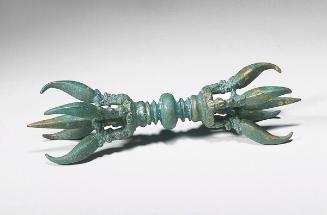
approx. 1300-1400
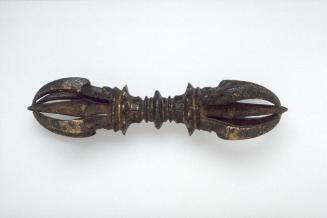
approx. 800-900

100-200 CE

900-1500
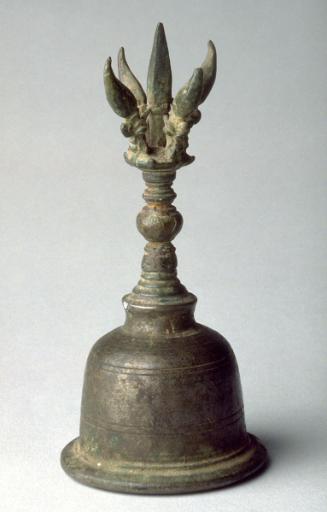
1200-1400
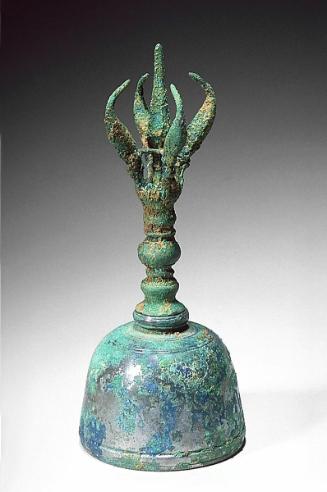
approx. 1300-1400
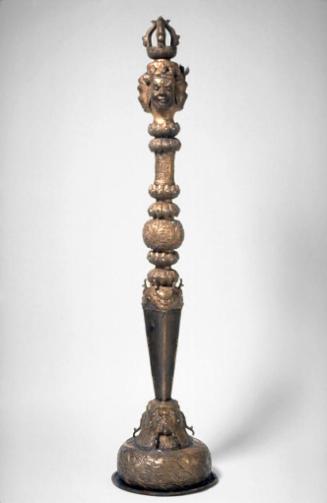
approx. 1700-1800

approx. 1800-1900


approx. 1800-400 BCE
Associated/Associated