
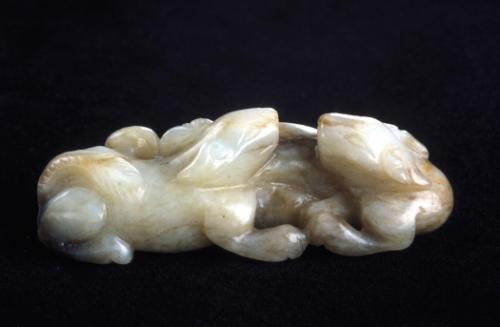
Two squirrels
Place of OriginChina
Dateapprox. 1800-1900
DynastyQing dynasty (1644-1911)
MaterialsNephrite
DimensionsH. 3/4 in x W. 2 3/4 in x D. 1 in, H. 1.9 cm x W. 6.98 cm x D. 2.54 cm
Credit LineThe Avery Brundage Collection
Object numberB69J30
DepartmentChinese Art
ClassificationsJade And Stones
On View
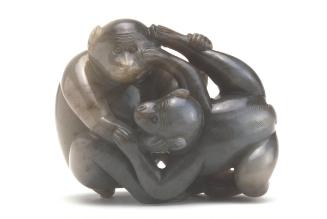
Not on viewPale green-white hetian jade with gray veins and flaws has been artificially enhanced with black dyes and used for a carving of a pair of squirrels. The smooth outer contours show off their mobile bodies and soft fur. Their parallel bodies and face-to-face posture clearly indicate that they are having an intimate conversation. The front legs of the squirrel that is looking back, and the belly and front legs of the other create a hollow triangular space. Their ears form a large, comma-shaped cloud head, a symbol of immortality. The underside of the piece reveals eight claws in relief. The soft cuts on facial features, paws, and tails eloquently represent the sweetness of the subject. The cosmopolitan people of the Tang dynasty loved squirrels, and these creatures are found on cast or repoussé metal works of that period. Some artists among the literati of the Ming and Qing periods tried to paint squirrels among the pine trees they loved. While paintings focused on undulating tails, however, jade representations focused on the amorous nature of these animals.
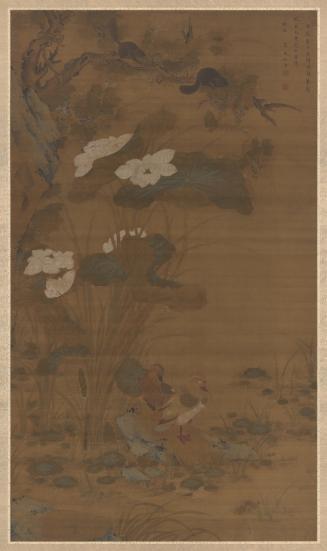
770-256 BCE
1644-1911
approx. 1800-1900
1644-1911
1700-1800