PeriodQing dynasty, reign of Emperor Kangxi (1662–1722)
DynastyQing dynasty (1644-1911)
MaterialsInk on paper
DimensionsImage: H. 71 1/2 in × W. 29 3/4 in (H. 181.6 cm × W. 75.6 cm)
Overall: H. 116 3/4 in × W. 34 3/8 in (H. 296.5 cm × W. 87.3 cm)
Credit LineThe Avery Brundage Collection
Object numberB65D52
DepartmentChinese Art
ClassificationsPainting
On View
Not on view
SignedTwo seals of Wang Jian read: Xiangbi; Wang Jian’s seal. The four seals of Wu Hufan and ten collectors’ seals include one of Daqian’s elder brother Shanzi
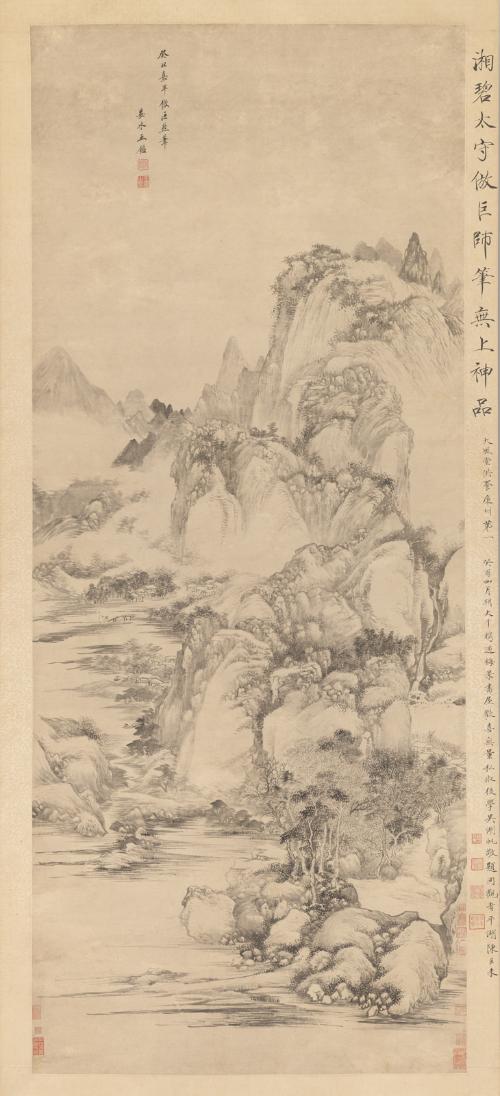
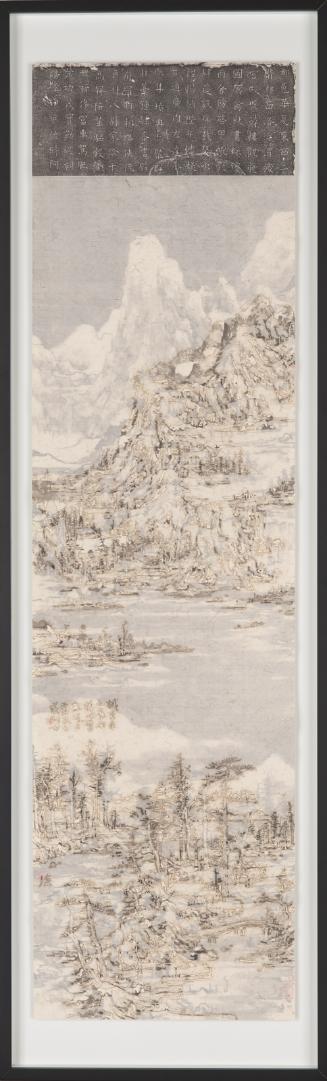
InscribedThe inscription on the painting reads: Imitating Juran’s brushwork, Wang Jian from Loushui in the good year guichou
The title tag on the edge of the outer mount states: Wang Lianzhou’s copy of Juran’s landscape, inscribed by Xiyuan zhuren in 1859.
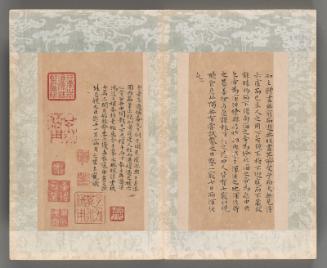
The inscription on the right edge of the mount by Wu Hufan (1894–1968) states: This copy of Juran’s brushwork by Xiangbi taishou is of a heavenly masterpiece, which had been regarded in the Dafengtang as the most superb work. In the fourth month of the guiyou year, Daqian brought this painting to Meijing shuwu; along with Mr. Chen Julai from Pinghu, we examined it with great joy. Respectfully inscribed by junior student Wu Hufan.
Text Entries
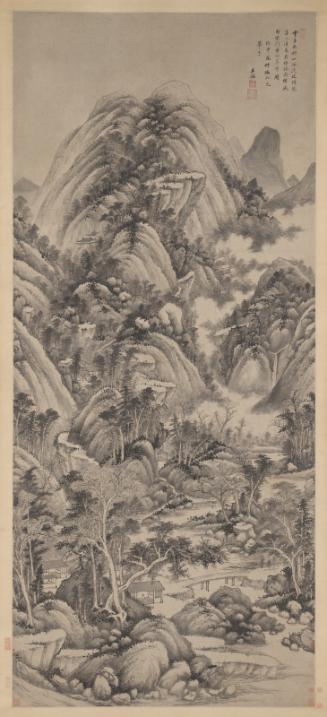
Beginning in the tenth century, Chinese painters began to choose subjects and styles suggesting a desire for seclusion, tranquility, and withdrawal from political engagement. This painting primarily depicts a series of reclusive activities: fishermen are angling or pulling in nets, and one of the men is crossing a bridge to return to his country villa. High, steep peaks gradually vanish in the distance. In the style of the much-admired ancient painter Juran, this hanging scroll has a subtle character typical of the refined connoisseurship of the conservative artists of the seventeenth century and reflects the continuity of tradition throughout the long history of Chinese landscape painting. The inscription on the top reads:
Imitating Juran’s [active second half of the tenth century] brushwork, Wang Jian from Loushui in the good year guichou [1673].