


Landscape
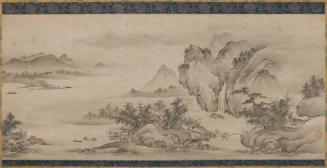
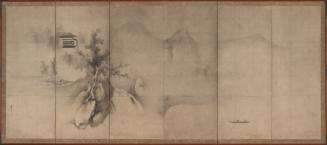
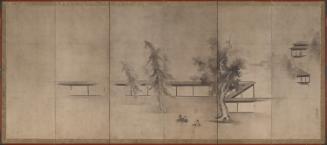
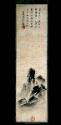
The words and pictures in this scroll reflect the sophisticated synthesis of Chinese artistic and literary styles favored in Zen Buddhist circles in the early 1500s. Soga Sojo’s landscape is executed in the “splashed ink” (haboku) manner, a technique favored by Zen monks in China and Japan. Swiftly applied, blot-like strokes, soft ink washes, and crisp details suggest the mountains, a half-hidden pavilion, trees, and two figures approaching on a path.
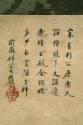
Above the landscape is a poem in Chinese. The writer, Gichiku Shurin (active sixteenth century), was a prominent Zen monk who served as abbot of Shokokuji Temple in Kyoto. The poem’s imagery invites viewers to imagine wandering through remote mountains in the same spirit as Gichiku’s counterparts in China during the fabled Tang (618–907) and Song (960–1279) dynasties.
In the Song period there was a painter Jing Haoran,
in the Tang period there was a poet Bai Juyi [Letian].
A monk strolls in the forests and around streams, tall pavilion and mansion glitter in gold and silver.
A few clouds float in the sky, a distant mountain silently awaits him.
(Label from in-focus rotation When Pictures Speak: The Written Word in Japanese Art)