

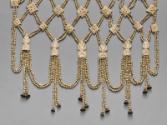
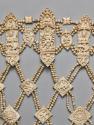
Bone apron (sanmudras)
- Gallery Location Gallery 12
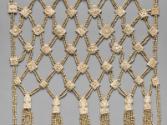
This bone apron, surmounted by six symbolic bone-carved “seals” (mudra, Tibetan chakgya) is a ritual power object. Properly understood in its physical verbal and mental aspects it transforms the wearer from a scattered person (prthag, scattered; jana, person) into the extraordinary “sky walker” or dakini—a female Buddha embodying the wisdom (prajna) of emptiness (shunyata) which is at once the ultimate reality and origin of all things. She can be terrifying as befits her garment, for bone symbolizes the impermanence (anityatva) and thus ceaseless momentary (kshanika) transformations that characterize the Tibetan Buddhist cosmos.
The dakinis carved into the large bone lozenges around which the network (jala) of bone beads have been woven (tantra, Tibetan gyu) are potential presences; for in ritual they come virtually alive insofar as they have been consecrated (pratishthita, Tibetan rabney).
This ritual symbolically transforms the wearer as a dakini or “sky walker” capable of moving from one distant region of the universe to another, by virtue of the fact that they have realized all phenomena (sarva dharma), lack cores (svabhava), and are thus empty (shunya).
In this same case, the Guhyasamaja sculpture shows a wisdom consort wearing an identical apron. But unlike this static display, there, the skirt is alive and moving, part of a sacred embrace that dissolves the boundaries between self and other. Here, isolated, it might make us ask: Can power be severed from context? Or does this garment still vibrate with the energies of the esoteric rituals aimed at realization (prajna) of emptiness (shunyata)?