

Textile
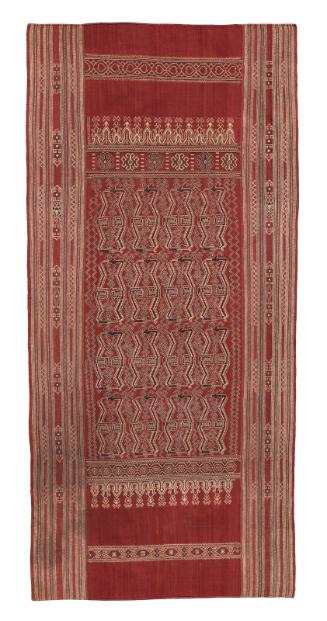
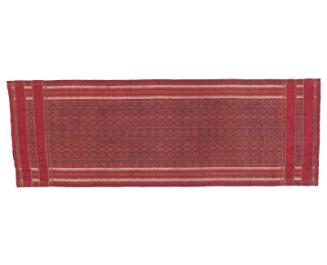
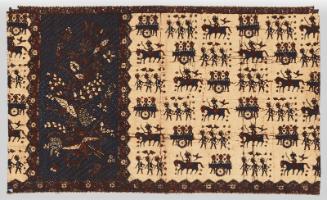
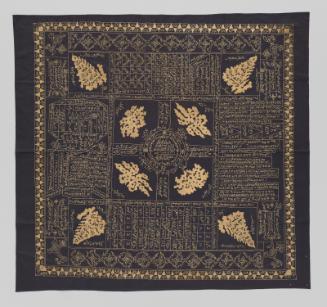
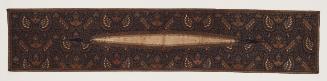
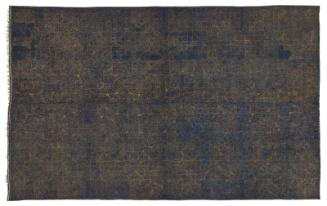
Indian textiles were imported to Thailand (then known as Siam) from at least the 1600s. The finest were reserved for use by the Siamese royal court—as clothing, for decorating palaces and temples, and for giving as gifts. Patterns in accordance with Thai fashion and taste, as seen here, were sent to India for production, with different grades of cotton specified for various uses and expense levels. These motifs are like those on other luxury goods such as lacquerwares, mother-of-pearl inlaid objects, and enameled ceramic wares made in China for the Siamese market.
This textile was intended to be worn as a wrapped garment (like a sarong is worn today in many parts of Southeast Asia). Men and women tied skirt cloths differently. When worn by a man, the cloth was wrapped around the waist, with the excess fabric in front pulled between the legs and tucked in at the back. A woman wore the cloth like a skirt secured with a belt, either with the ends tied at the waist or pleated in the front.