After the Rain
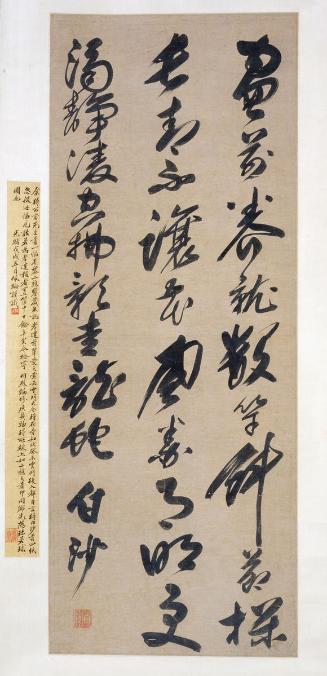
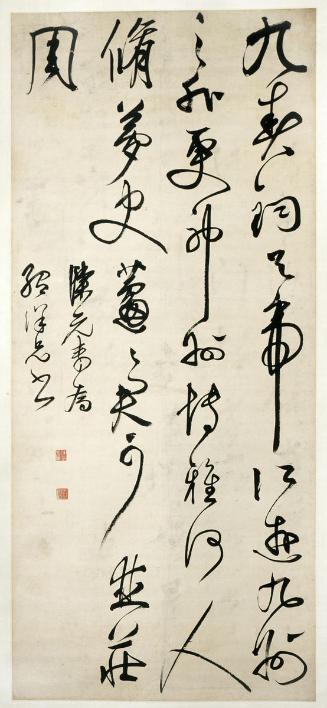
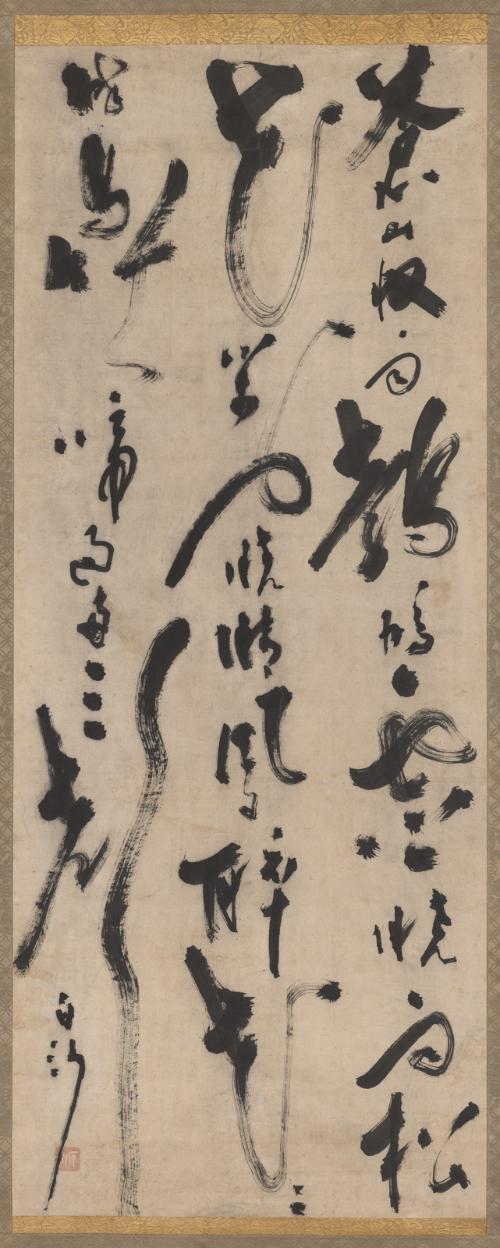
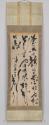
明陳獻章草書《喜晴》詩
The philosopher, educator, poet, and calligrapher Chen Xianzhang, who lived in the mountains, often ran out of brushes for writing, so he used thatch grass instead of animal hair. As a result, his brushwork is generally characterized by bold sweeping strokes with rough edges and "flying white" dryness (see detail). After the Rain is a poem that describes the birds happily singing in the wind among flowers outside the window right after the rain stopped.
The Chinese transcription below corresponds to the calligraphy, which reads from top to bottom and right to left:
蒼山收雨鵓鳩靈
曉雨松花對曉晴
風日醉花花醉鳥
竹門啼過两三聲
Curator's voice:
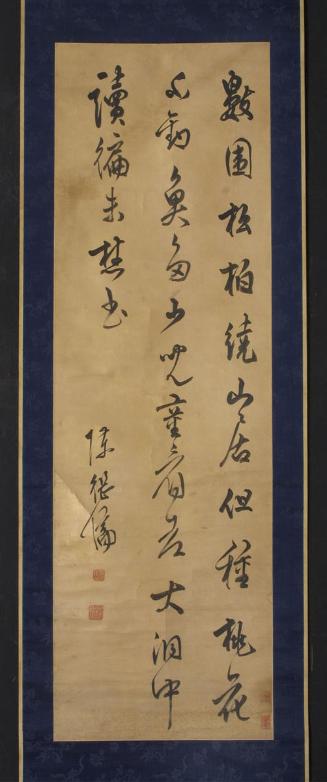
Only being familiar with his smaller-scale works, when I saw After the Rain I wanted to know how this work in a large hanging scroll format compared to his more typical handscrolls. After some research, I found two pieces that stylistically link to After the Rain. The first connecting piece was located in the Shanghai Museum's collection and the second in the Guangdong Provincial Museum. The three works share similar characteristics in both style and execution.