



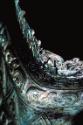
Ritual wine vessel (Liang Qi hu)
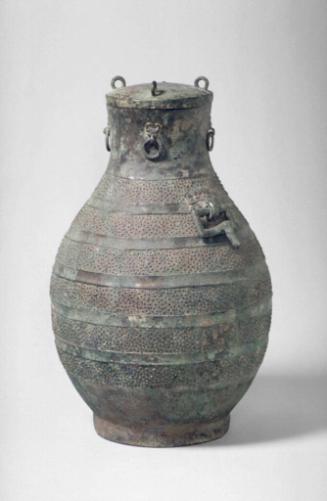
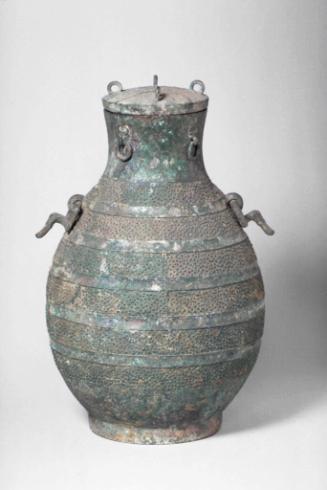
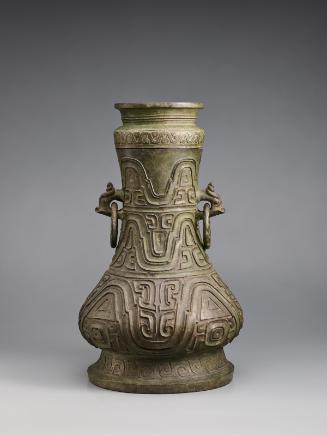
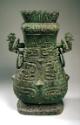
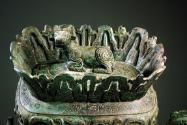
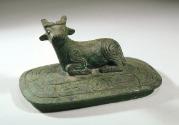
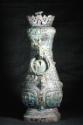
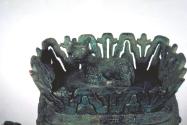
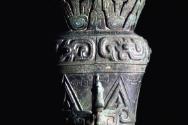
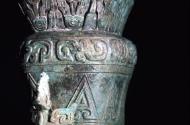
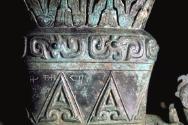
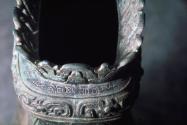
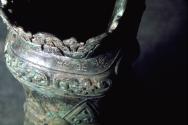
The "leather straps and rivets"' on the lower part of the hu (B60B1012) serve as a frame for eight identical panels filled with symmetrical, barbed C-shaped figures centering on a single protuberant eye. This is the culmination of the development of a motif which can be traced back to the Early Western Zhou. The small revolving animal shapes reproduced eight times on the upper neck belt and four times on the shoulder are derived from such dragons as decorate the Mid Western Zhou yi. The grooved foot and rising blades of the intermediary zone on the neck also have antecedents. In the final analysis the originality of the vessel rests with its crown, lid and handles. The crown, an openwork rendering of the broken wave band with conventionalized masks, serves as a pen for the buffalo-shaped knob of the small flat lid. The sturdy and tense loop handles bear animal heads of a well-known type, but these heads are equipped with flat raised trunks in the shape of fanged and flanged dragons which look peculiarly aggressive.
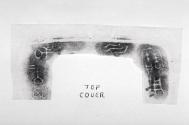
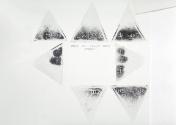
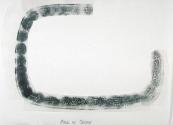
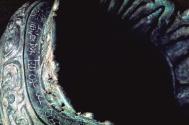
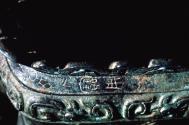
This hu bears three inscriptions incised on the lid, the base of the crown and the neck. These inscriptions can be translated as follows: "On the day r enshen of the first quarter of the fifth month Liang Qi made (this) sacrificial hu to he used in memorial sacrifices to his august ancestors. (Our) departed fathers (will) use (it) to beg (on our behalf) for many happinesses and longevity without boundary. May his hundred sons and thousand grandsons forever treasure (it) and use (it). May his sons and grandsons forever use (it) and treasure (it)."