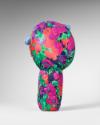
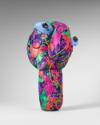

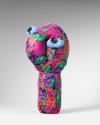
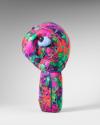
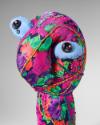
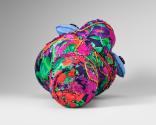
Teary Eyes
Gurjeet Singh: When Words Hurt
At first glance, Gurjeet Singh’s work often feels fun, playful, and light. And it is. His pieces can be full of color, texture, and materials, with large tongues, noses, and eyes. But the supposed strangeness of the works, the way they might be read as monsters or creatures, speaks to larger issues of othering and the ways in which people can impact us with their words and actions. Whether it is Sikh, South Asian, Queer, soft, or hard, Singh’s works confront issues of representation and identity, addressing the complex challenges inherent in fashioning ourselves and shaping how we appear in the world. The group of works presented here pull on the idea of speech and how we transform or carry things people say to or about us through a presentation of Singh’s multifaceted practice in sculpture, painting, and text, as well as through partnerships in photographs and social media.
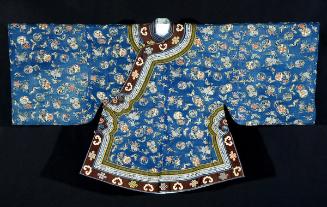
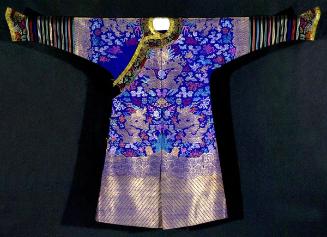
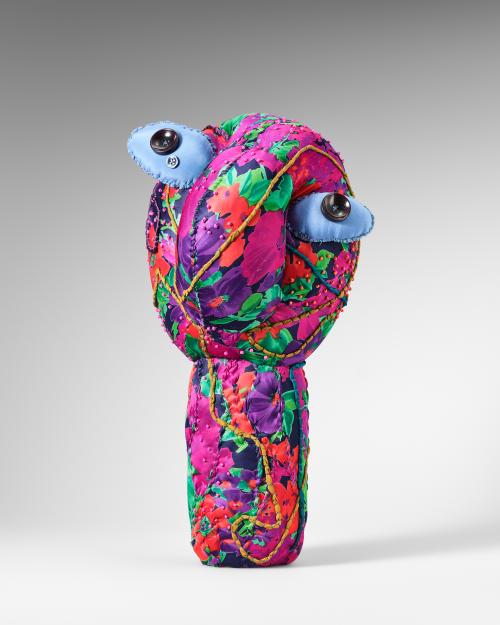
It is hard not to feel something staring into the large globular eyes of Gurjeet Singh’s Teary Eyes — a small button sewn next to a larger one represents a teardrop. Singh’s work is full of emotion. But are they the teary eyes of a Crying Face emoji — —or the blurry tears of the Pleading Face (aka Holding Back Tears) emoji — . The work seems caught between playful joy and a deeper sorrow. The character is feeling something. He’s holding it in and hiding it. He wants to tell the world, but the world is not ready. The sculpture is made from pieces of dress fabric, often associated today with women’s wear. But as the shirts on display in the nearby case suggest, fashion is constantly in flux, and designs know no gender. As the fabric for Teary Eyes was stitched, it would rip, revealing new tears in the materials that needed to be sewn or stitched together, the form emerging as Singh worked on it.