Michael Czaja
E. Michael Czaja
Architecture: Berkeley
1911-1994
Professor Emeritus
Michael Czaja was an artist and architect of significant creative talents, an important force in the development of progressive ideologies, and a scholar of unusual achievement. He died of cardiac arrest at home in Mariposa, California, at the age of 82 on June 6, 1994; he had come to California in 1948. He was born on October 22, 1911, in Adams, Massachusetts, and spent his boyhood there. He graduated from Rensselaer Polytechnic Institute in 1936 with a master's degree in architecture, and completed his early professional experience in architecture in various offices located in Chicago, Pennsylvania, and Cranbrook, Michigan. He joined the Berkeley faculty in 1948 and retired in 1978. He was a very special person of modest demeanor but with deep convictions.
In his early architecture practice, starting in 1939, Czaja worked with Antonin Raymond, architect, when he developed an interest in rural residential and farm building design. He also worked in the office of Eliel and Eero Saarinen in 1940-41 in Cranbrook, Michigan, where his projects not only included ecclesiastical buildings and music halls, but also a large 500-unit war housing project. Locally, on the Berkeley campus, with Michael Goodman, he collaborated on the design of laboratory buildings and student housing facilities in Barrington Hall. In his own private practice he completed designs for the Valley Art Center Gallery in Walnut Creek, a convalescent home for the aged, and an equestrian center in Atherton.
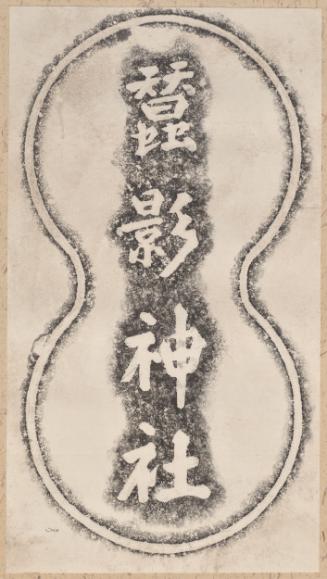
Czaja had several one-man shows of his paintings throughout the country, including at the Denver Art Museum, the Santa Barbara Museum, the Crocker Arts Gallery in Sacramento, and the California Palace of the Legion of Honor in San Francisco. Many of his works are in private collections. He also made a unique set of ninety ink rubbings of sacred roadside carvings and sculptures that guarded rural crossroads and rice fields around Japan, which were first exhibited at UC Berkeley's Museum of Anthropology. In 1991, Czaja donated sixty of the rubbings to the Asian Art Museum of San Francisco, where they are now part of the museum's permanent collection.
In the 1930s and 1940s, the young Czaja was interested in the then forward-looking and socially significant doctrines of modern architecture. An avant garde student publication of that time called Task magazine was published in turn by students on different university campuses. Czaja was a member of its editorial board in 1942-43. He was a later member of the Bay Area's Telesis, a group of socially concerned architects, landscape architects, planners, and designers who had published its own issue of Task magazine.
Czaja was active in the civic affairs of his community during his residence in Walnut Creek. He was president of the board of directors of the Valley Art Center in Lafayette in 1956 and was chairman of the Walnut Creek Planning Commission in 1951. He had an active involvement in several design awards programs, as well as public lectures and radio programs there.
After retiring to Mariposa in 1980, Czaja remained active, contributing to the Mariposa Community Planning Advisory Council, the Space Needs Task Force, and the Mariposa Town Planning Area Specific Plan and Environmental Impact Report, for which Mariposa County received the National Award of Merit from the American Planning Association in 1993.
Through his association with Antonin Raymond, who maintained a large architectural practice in Japan, Michael Czaja became interested in the vernacular arts and crafts of Japan, most specifically the sculptured roadside shrines of the Japanese countryside. Among his public lectures on the subject were “"Sacred Japanese Stone Carvings, Their Origin, Meaning, and Use in Folk Religion"” (1968); “"Craftsmanship in the Arts of Japan"” (1966); and “"Pre-Shinto Religious Beliefs of the Japanese as Reflected by Mythology and Religious Folk Art” (1974). It was his rubbings of these artifacts that are referred to above.
His book on the subject, Gods of Myth and Stone (Weatherhill, New York, 1974) is regarded as definitive. George De Vos begins his preface to the book:
"This perceptive study, both visual and verbal, by Michael Czaja, of the worship of fertility in Japan is instigated by a restless curiosity of mind as well as an original artistic sensibility."
This aspect of Czaja's work was supported by Fulbright, Ford Foundation, and UC Berkeley grants.
Other books include Antonin Raymond, Architect (Architectural Association, London, 1962) and a book on freehand drawing.
Michael Czaja was a dedicated and effective teacher. His courses were sought after and he was popular with generations of students. A former student of his, the architect Edward Anisman, remembers Czaja as a stimulating teacher who gave him self-confidence and encouraged him to "take action" in his design work, which had a lasting influence on his career. Anisman also remembers that students appreciated classes conducted at the Czaja home, which developed into intellectual exchanges in a convivial atmosphere.
Czaja was an unusual blend of artist, architect, scholar, and teacher.
He is survived by his wife, Helen; two daughters, Viki Wong and Toni Crane; and three grandchildren.
Henry J. Lagorio Claude Stoller
Home|Contributing Institutions|Collection Guides|Browse Map|About OAC|FAQs|Contact Us|Privacy Statement|Terms of Use|Accessibility
The Online Archive of California is a service of the UC Libraries, powered by the California Digital Library.
http://texts.cdlib.org/view?docId=hb5g50061q;NAAN=13030&doc.view=frames&chunk.id=div00023&toc.depth=1&toc.id=&brand=oac4