
Farming in spring
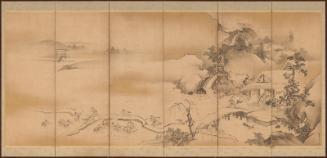
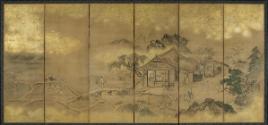
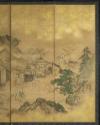
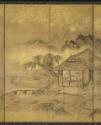
This screen depicts farming activities in the spring. In the right corner is a farmhouse cheerfully enlivened by flowering cherry trees. In one of the rooms a man, attended by a servant, sits at his leisure. Outdoors, in contrast, farmers are busy planting rice seedlings. A woman walking on a narrow path hastens to bring them more seedlings. This screen was originally paired with a now-missing lefthand one that depicted farming activities in the fall.
Agriculture was a popular theme for paintings in Japan. In particular, paintings made by members of the Kano school, such as this one, favored themes like the ones shown here in order to meet the demands of the military administration, which promoted farming as a means of increasing the nation's wealth. Typically, such scenes were idealized, as in this painting.
Kano Tsunenobu was a nephew of the senior master Kano Tanyu (1602–1674), who painted works with similar themes.