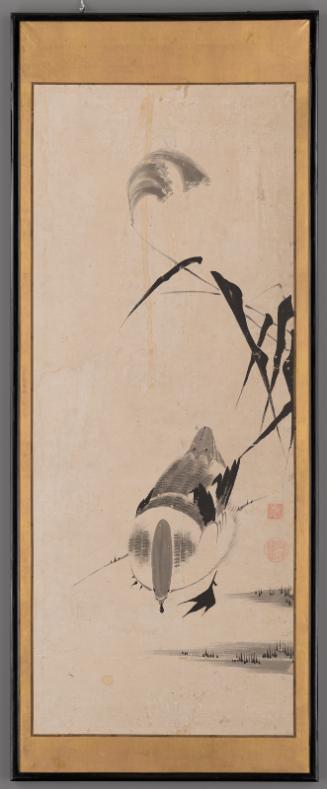

Geese and reeds
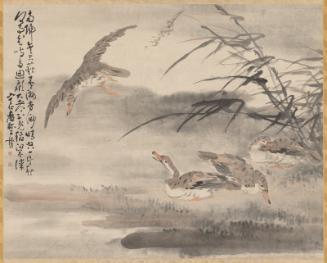
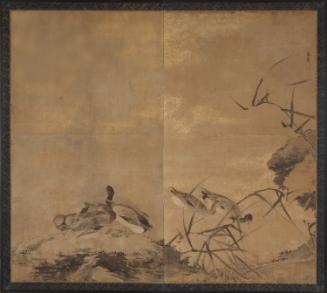
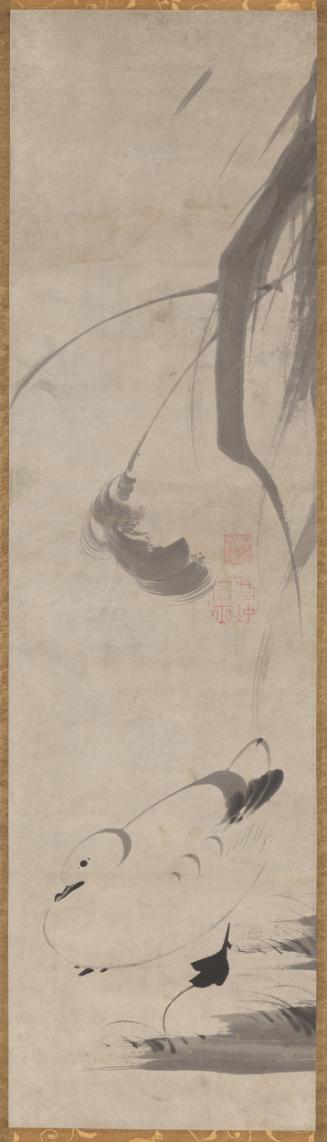
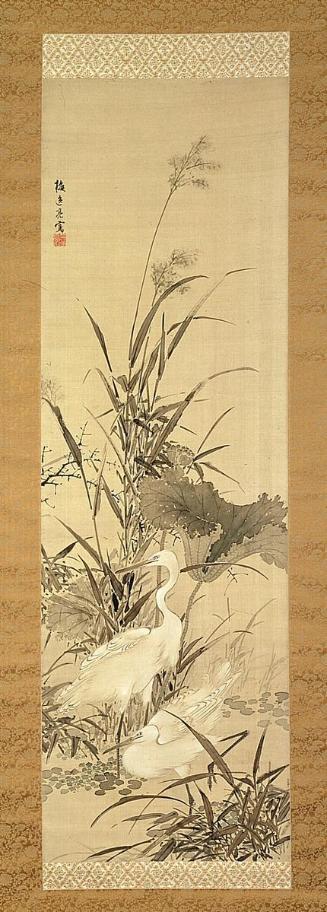
The motif of reeds and geese (Anser albifrons), much like ducks on a riverbank, finds its origins in Chinese paintings. A favorite subject among painters working both for samurai and Buddhist patrons, the call of wild geese is the quintessential signal that autumn has arrived. Here, the geese are of the type the painter could find in and around the city of Edo.
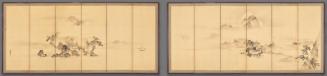
Kano Naonobu, like his older brother Kano Tanyu, served as an official painter to the Tokugawa Shogunate. The two brothers worked together on many projects, but Naonobu became most well- known for his explorations of subtle ink washes and delicately modulated scenes of clouds and mist. In this painted screen he leaves most of the paper surface unpainted. The flying geese above and standing geese below transform the paper surface into a vast, misty expanse.