

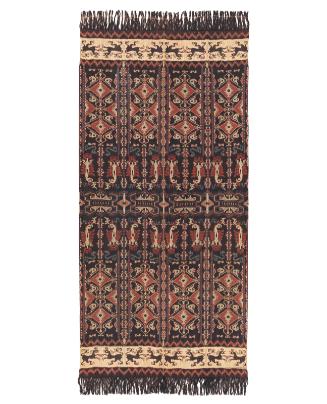
Man's wrap (beti)
Place of OriginSoe, West Timor, Indonesia; Soe, West Timor, Timor island
Dateapprox. 1918
CultureAtoin Meto
MaterialsCotton and natural and synthetic dyes
DimensionsOverall: H. 42 in × W. 93 in (106.7 cm × 236.2 cm)
Credit LineMuseum purchase, Gladys K. Barber Endowment; with additional funds from Walter Jared Frost and David Salman, and M. Glenn Vinson, Jr.
Object number2022.94
DepartmentSoutheast Asian Art
ClassificationsTextiles
On View
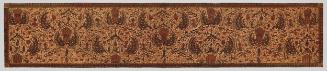
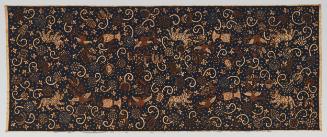
Not on viewThe intricacy of design on this cloth indicates that it likely would have been worn by a man of high status. It is possible some of the brighter colors were produced by synthetic dyes. Faber dyes, which were first introduced toward the end of the nineteenth century, were both expensive and at the time considered prestigious. On the neighboring island of Kisar and on Timor they would be, as seen here, used to replace natural red colors, and in combination with indigo.
This textile was collected by the Dutch artist, author, and ethnographer W. O. J. Nieuwenkamp in the early 1900s.
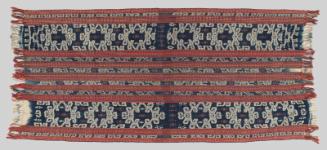
approx. 1918
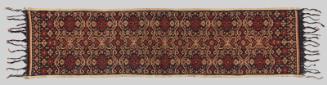
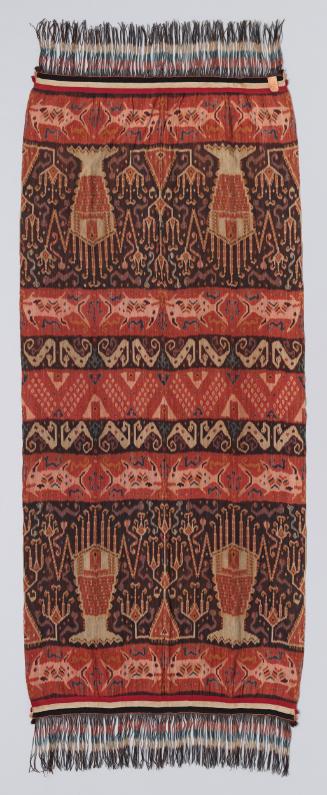
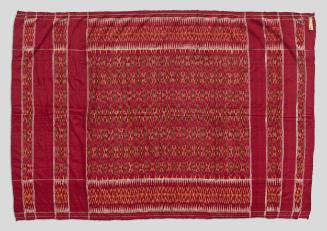
1904-1906
1915-1925
1928
1875-1900
1900
1928