
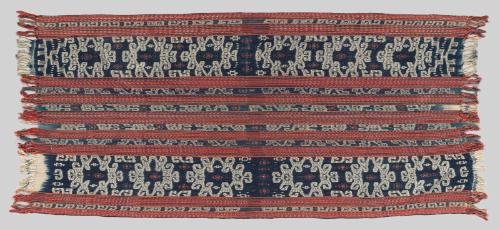
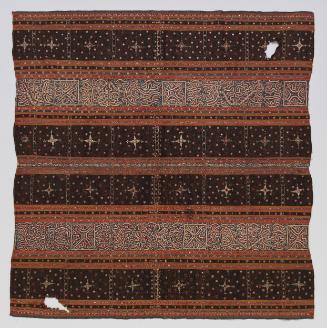
Man's wrap (beti)
Place of OriginAtoin, West Timor province (Timor island), Indonesia; Timor island, Atoin, West Timor province (Timor island)
Dateapprox. 1918
CultureMeto people
MaterialsCotton and natural dyes
DimensionsH. 37 in × W. 86 11/16 in, H. 94 cm × W. 220.2 cm
Credit LineMuseum purchase, Gladys K. Barber Endowment; with additional funds from Walter Jared Frost and David Salman, and M. Glenn Vinson, Jr.
Object number2022.95
DepartmentSoutheast Asian Art
ClassificationsTextiles
On View
Not on viewThroughout the twentieth century government agencies discouraged people on Timor from wearing hand-woven textiles, which were considered un-modern. Today, efforts to reverse these policies include requiring civil servants to wear traditional textiles on certain days of the week. But there are far fewer weavers producing finely woven textiles. Many people cannot afford them and resort to buying imported imitations.
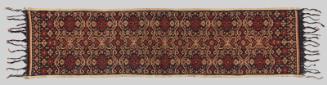
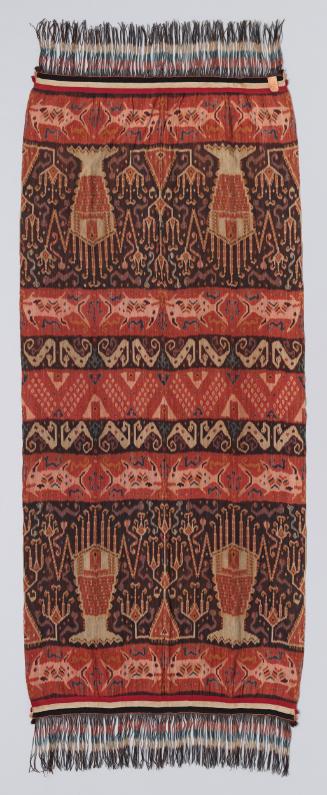
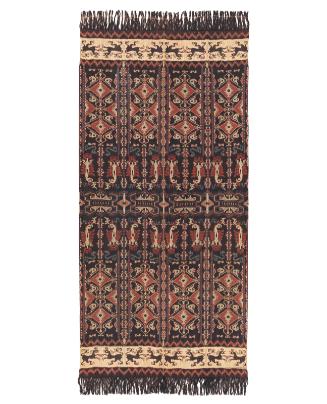
This striking man’s wrap was collected by the Dutch artist, author, and ethnographer W. O. J. Nieuwenkamp in the early 1900s. The patterns of hooks and tendrils are produced through a complicated dyeing process called ikat.
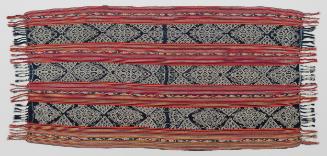
approx. 1918
1904-1906
1915-1925
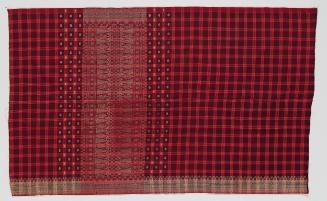
1928
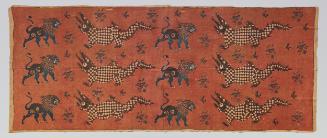
1875-1900
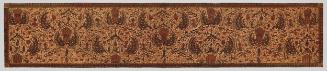
1900
1928