
The lama Karma Pakshi
- Gallery Location Gallery 12
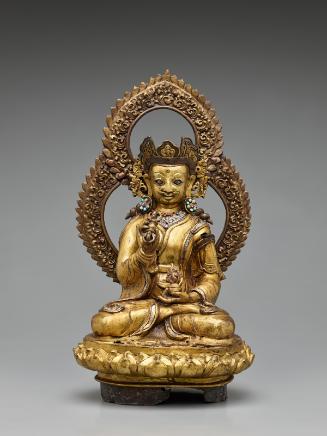
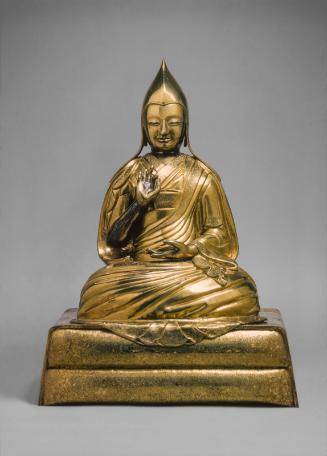
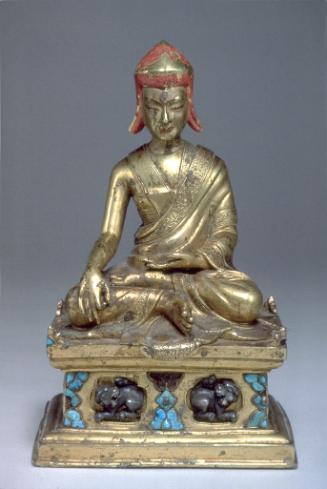
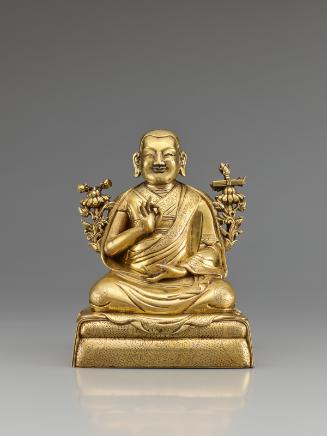
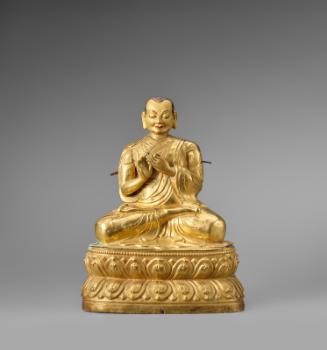
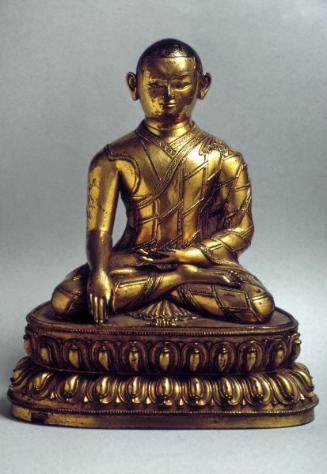
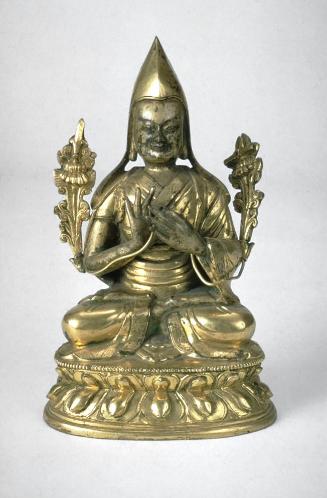
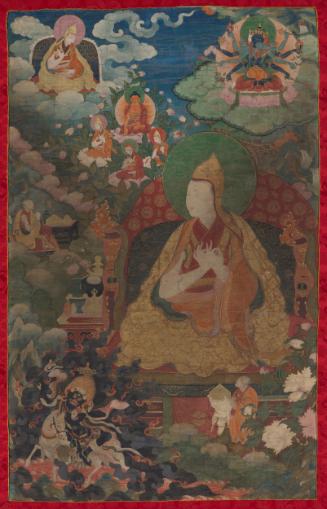
Karma Pakshi (1204–1283) is the Second Karmapa reincarnate lama in the great Karma Kagyu tradition. A legendary Tibetan Buddhist master renowned for his profound teachings and miraculous powers, he was also deeply involved with the Mongol Empire and its rulers. In this sculpture we can recognize him by his telltale pointed beard.
Born in Kham, eastern Tibet, Karma Pakshi was a reincarnation (sprul sku) of an illustrious predecessor in the Karma Kagyu lineage. He demonstrated extraordinary spiritual abilities from his youth. When his fame reached the Mongol court, he was invited by its ruler Mongke Khan. Karma Pakshi impressed the court with miracles, such as flying, subduing wild horses, and transforming his body into multiple forms. However, after Mongke’s death, Karma Pakshi fell out of favor with his successor Kublai Khan. Imprisoned by the Great Khan, Karma Pakshi used his spiritual powers (siddhi) to survive everything from poison to chains. Duly impressed, Kublai Khan came to revere him despite promoting the rival Glorious Sakya (dpal ldan sa skya) order as regents of Tibet (see Virupa in this case).
Karma Pakshi’s teachings emphasized Mahamudra or Great Seal, the practice of realizing the innate nature of mind as luminous, unchanging, and empty of self. Instructions to realize this state can be found in the Mahamudra instructions important in the Karma Kagyu. These include relaxing without fixation, not altering thoughts, and resting in awareness itself. By neither grasping nor rejecting in this manner, one realizes the natural state of mind free from any modifications, and with it liberation.
- Buddhism
- lotus